

Every year the extension market shifts a little, and every year salons that spot the shift early are the ones whose appointment books fill first. The 2026 hair trends forming now…
Every year the extension market shifts a little, and every year salons that spot the shift early are the ones whose appointment books fill first. The 2026 hair trends forming now are less about dramatic reinvention and more about refinement: clients want hair that looks like it grew out of their own scalp, moves like it, and survives a real schedule. For salon owners, boutique buyers and importers, that means the conversation is moving away from “how long can I go” and towards texture, tone, longevity and how quickly a service can be delivered without compromising the finish. This guide covers what salons are actually selling this year, and how to stock for it without overcommitting capital.
The defining shift: believability over drama
The single biggest change in hair extension trends for 2026 is that visible extensions are out of fashion. Clients are no longer asking for a dramatic transformation they have to explain to friends; they are asking for hair that reads as theirs in daylight, on camera and in the mirror at close range. That has three practical consequences for the salon floor.
First, the install itself has become the product. A bundle that looks superb on a mannequin but shows a blunt line at the crown is a refund waiting to happen. Salons are investing in blending technique, in invisible attachment methods, and in stylists who can cut a face-framing layer into an extension so the transition disappears.
Second, clients are buying maintenance rather than one-off purchases. A client who books a move-up every six to eight weeks for tape or sew-in attachments is a client on a recurring revenue cycle. Salons that build the maintenance appointment into the initial booking are seeing far better retention than those who leave it to chance.
Third, quality expectations have risen at every price tier. Clients who have been burned by shedding, matting or tangling after two washes are far more careful now. They ask where the hair comes from, whether it is Remy, whether the cuticle is aligned, and how long it will genuinely last. Being able to answer those questions confidently is a competitive advantage.
What salons are booking most in 2026
Invisible tape and seamless wefts
Tape-in extensions continue to dominate the mid-market because they are fast to install, comfortable for the client and easy to conceal in fine hair. The 2026 refinement is in the tape itself: thinner, more flexible strips that sit flatter against the scalp and tolerate heat styling without lifting at the edges. Alongside tape, seamless or hand-tied wefts are the premium option salons are upselling, particularly for clients with finer hair who want volume without bulk at the root.
The polished blowout as a service
The bouncy, glossy, slightly undone blowout has become the signature look of the year. It is forgiving, it photographs well, and it suits almost every face shape. For extension clients this is excellent news, because a blowout is the most flattering way to display a well-matched set. Salons are packaging a blowout finish into the install price and teaching clients how to recreate it at home with a round brush and a heat protectant, which reduces complaints and increases referrals.
Colour-matched closures and frontal work
Lace closures and frontals remain essential for clients who want a natural hairline, and the emphasis in 2026 is on colour accuracy rather than dramatic parting tricks. A closure that is half a shade off the bundles is the most common reason a finished install looks artificial. Buyers are increasingly requesting closures sourced and colour-matched alongside the bundles in the same order, rather than picking them up separately later.
Low-maintenance and protective styling
A large share of clients are opting for styles that protect their natural hair while looking polished: sleek ponytails, braided styles with extension volume, and shoulder-skimming cuts that need less daily styling. These looks demand hair that holds a curl, resists frizz in humidity and does not need heavy product to behave. That is a sourcing question as much as a styling one.
Colour direction: lived-in and dimensional
Colour is where the 2026 hair trends are most visible. The high-contrast balayage of recent years is giving way to softer, more blended dimension: root shadows that melt into mid-lengths, muted brunettes with subtle warmth, cool ash tones that stay cool rather than turning brassy, and a growing appetite for natural-looking highlights placed around the face rather than through the full length.
For salons, this creates a practical requirement. Dimensional colour work on extensions is only convincing when the hair accepts colour predictably and holds tone. Hair that has been heavily processed or stripped during collection will not behave the same way, and the result is a client who returns in three weeks with faded, dry ends. This is one reason buyers are moving towards raw, virgin and Remy hair from reputable manufacturers rather than anonymous bulk lots.
It is worth being clear about terminology here, because the market is full of confusing claims. At Suvita Hair Global, raw, virgin and Remy are the same grade of 100% Virgin Remy Indian human hair and differ only in how many donors contribute to each bundle: raw hair comes from a single donor, virgin hair from two to three matched donors aged twenty to thirty, and Remy from three to five matched donors in the same age range. None of these is a higher or lower grade than the others; the difference is consistency of texture across the bundle, which matters most when a client wants a seamless, uniform result.
Stocking for the year without tying up capital
The temptation when a new trend emerges is to buy deep and buy fast. That is usually a mistake, particularly for salons and small boutiques that cannot absorb dead stock. A better approach is to test the trend in small quantities, measure what actually sells, and reorder against real demand rather than predicted demand.
This is where supplier flexibility matters more than headline pricing. A manufacturer that will ship a sample order, with no minimum order quantity, lets you evaluate texture, colour accuracy and how the hair behaves after a wash before you commit to a larger parcel. Wholesale list pricing typically applies from around 1.5 kg upward, which is a sensible threshold for a salon or boutique placing a first proper stock order.
Practical steps for building a 2026 stock plan:
- Audit last year’s sales by length, texture and colour, and identify which SKUs sat untouched for more than a season.
- Order samples in your three best-selling lengths before committing to bulk, and test them with a real install rather than a mannequin.
- Match closures and frontals to bundles at the point of order so colour is consistent across the set.
- Keep a small buffer of your fastest-moving natural shades, and hold fashion tones to order rather than in stock.
- Confirm the manufacturer’s documentation and shipping method before your first order, so customs clearance does not delay a launch.
- Decide early whether you want unbranded plain packaging or private labelling, because the latter adds production time.
Suvita Hair Global manufactures and exports from Delhi and ships standard orders unbranded in plain packaging, which suits resellers who apply their own branding at the point of sale. Private labelling is available on request across custom boxes and bags, branded tags and hang-cards, logo printing, inserts and care cards, with a minimum of fifty pieces per private-label order. Payment terms are 100% in advance by SWIFT bank transfer, and shipping is by DHL Express with full export documentation including commercial invoice, packing list and certificate of origin.
Building a menu that survives the trend cycle
Trends rotate. The salons that thrive are the ones whose core offer stays valuable regardless of which texture or tone is having a moment. That means stocking hair that lasts, training staff to install it invisibly, and being honest with clients about care and maintenance.
Longevity is the strongest selling point you have. With proper care, Suvita hair lasts a minimum of three to five years in every grade, which reframes the purchase from a disposable beauty expense into a durable one. Keep attachment intervals separate in your client conversations: tape and sew-in attachments are redone every six to eight weeks, and that is a property of the attachment method, not a sign that the hair is failing. Clients who understand the difference between hair life and attachment life complain far less and rebook far more.
Finally, resist the urge to chase every micro-trend. Pick two or three signature looks for the season, build the retail and aftercare around them, and let the rest of the menu stay stable. Consistency is what turns a first-time extension client into a five-year one.
What to do next: pull your last twelve months of extension sales and identify the three lengths and textures that actually paid for themselves, then order samples in those exact specifications before you restock. Test one install properly, check how the hair behaves after a wash and a heat-style, and only then place a wholesale order sized to your real sell-through. If private labelling is part of your plan for the year, start that conversation early so packaging production does not hold up your launch, and confirm shipping and documentation requirements with your supplier before the first parcel leaves Delhi.
Ready to source premium human hair — factory-direct?
Suvita Hair supplies wholesale extensions, wigs and bundles to salons, distributors and beauty brands, with active buyers in 23 countries. Reply within 24 hours, DHL door-delivery, no middlemen.
- Factory-direct wholesale rates
- Sample orders accepted
- No MOQ — sample orders welcome
- IEC & GSTIN registered exporter
Suvita Hair Editorial with Deepak Kumar
Seven+ years sourcing, grading, and exporting Indian human hair to wholesale buyers on every continent. We write to help salons and distributors buy smarter — no fluff, just what we actually see in the factory.
Related Articles
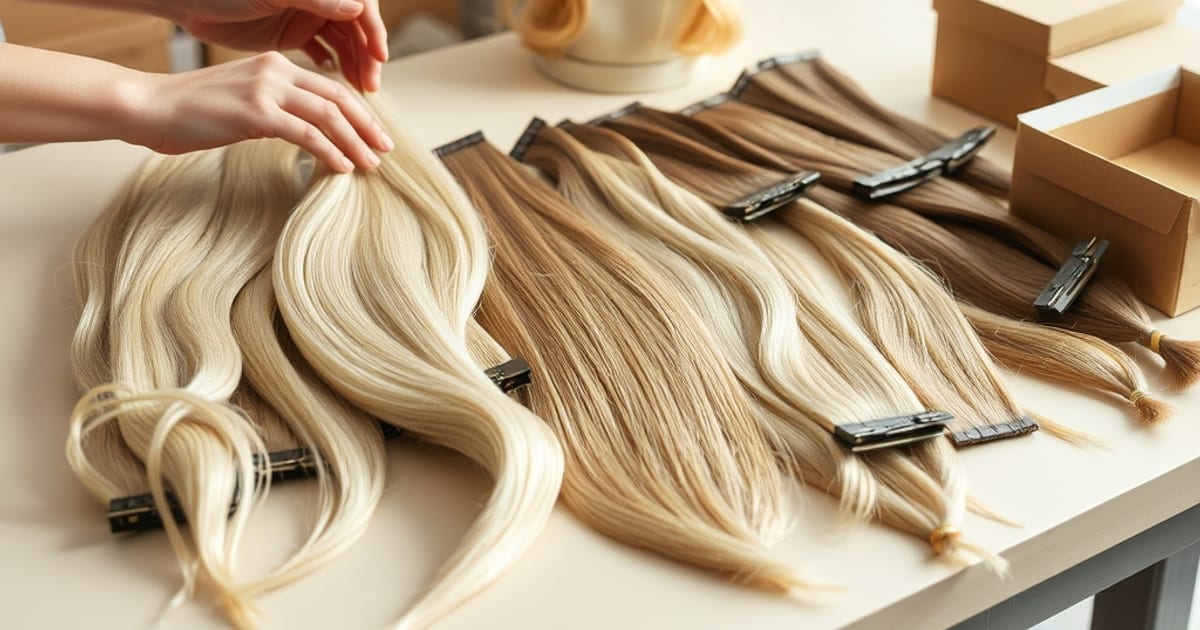
Summer Hair Extensions: Heat, Sun, Chlorine and Salt Water Guide
What summer sun, humidity, pool chlorine and sea salt do to human hair extensions, how to shift your stock mix for hot months, and what to tell clients.
Read article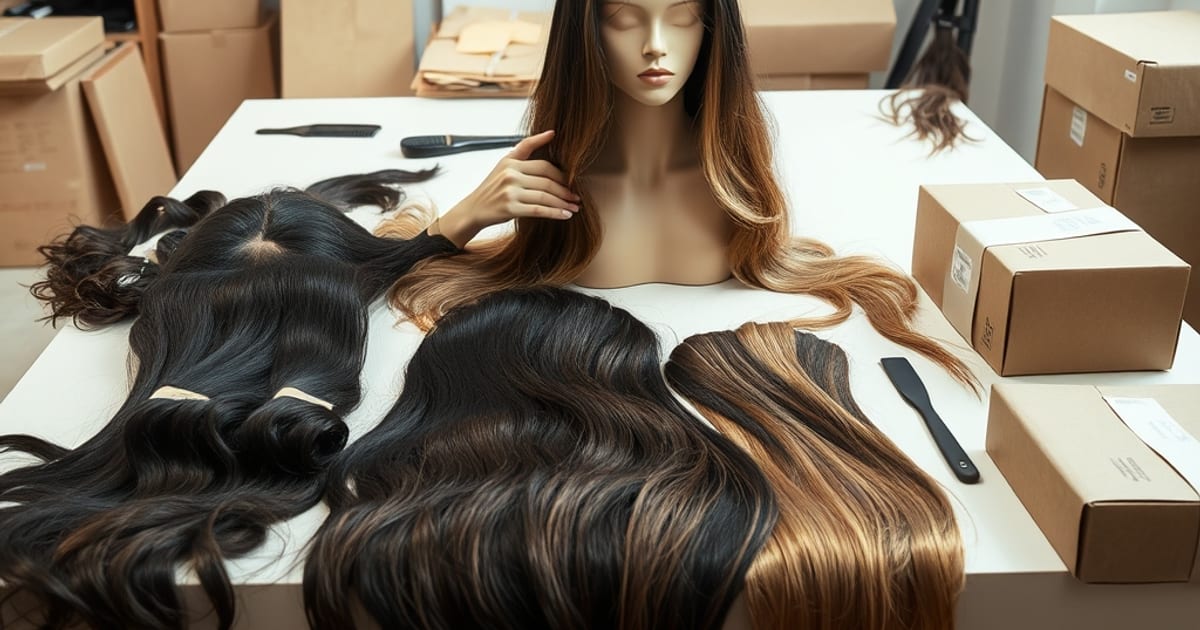
360 Lace Frontal Wigs for European Salons: 2026 Stock Guide
An order plan for European salons adding 360 lace frontal wigs: lengths, density, lace type, shades and the import paperwork, without guesswork.
Read article
Money Pieces and Face-Framing Highlights: Wholesale Sourcing
Formats, shade pairs and the exact purchase-order details for buying money piece and face-framing highlight extensions wholesale.
Read article