
International wholesale hair transactions carry a unique tension: high-value cargo, long shipping routes, and trust built across time zones and languages. For salon owners…
International wholesale hair transactions carry a unique tension: high-value cargo, long shipping routes, and trust built across time zones and languages. For salon owners, boutique resellers, and importers sourcing from India, the question is rarely whether to pay — it is how to pay without exposing capital to risk. Wire transfer, letter of credit, and escrow each occupy a distinct place in cross-border trade, and understanding their mechanics, costs, and safeguards helps buyers protect themselves while keeping supply chains moving.
Why Payment Safety Matters in Hair Wholesale
Human hair extensions are not commodity goods in the everyday sense. A single container of premium bundles can represent months of working capital for a salon group or a boutique chain, and the product cannot be inspected before it leaves the origin warehouse. Disputes over quality, weight, or colour consistency are common, and without a structured payment framework, the buyer often bears the full burden of proof. In this environment, the safest approach is one that ties payment milestones to verifiable steps — shipment, customs clearance, or independent inspection — rather than to promises alone.
Suppliers based in Delhi and other Indian export hubs operate under standard trade terms, but their internal policies vary widely. Some factories accept 100% advance payment via SWIFT bank transfer, others insist on a letter of credit, and a smaller number experiment with third-party escrow platforms. Each model shifts risk between the parties in different ways, and the right choice depends on order size, relationship history, and the buyer's tolerance for upfront exposure.
Wire Transfer — Speed and Simplicity with Risks
How Wire Payments Work
A wire transfer moves funds directly from the buyer's bank to the supplier's bank, usually within one to five business days depending on the corridor. For Indian exporters, SWIFT transfers remain the dominant method because they integrate smoothly with export documentation and require no intermediary platform. The buyer sends the full amount, the supplier releases the goods, and the transaction completes once the shipment clears customs at the destination.
Where the Risk Lies
The core vulnerability is timing. Once the wire is confirmed, the buyer has limited recourse if the supplier fails to ship, ships substandard product, or diverts the consignment. Fraudulent suppliers sometimes use cloned invoices, fake bank details, or pressure tactics to secure payment before any contract is signed. Even legitimate suppliers may face production delays, customs holds, or quality discrepancies that are costly to resolve after funds have left the buyer's account.
When Wire Transfer Makes Sense
Wire payments are reasonable for repeat orders with a trusted partner, sample purchases, or small wholesale quantities where the financial exposure is manageable. They are less suitable for first-time orders, large container loads, or suppliers with no verifiable track record. Buyers using wire transfers should insist on a written purchase agreement, verify bank details through a separate channel, and confirm shipment tracking before considering the payment complete.
Letters of Credit — The Bank-Backed Standard
How Letters of Credit Work
A letter of credit, or LC, is a guarantee issued by the buyer's bank to the supplier's bank that payment will be released once specified documents are presented. Typical documents include a commercial invoice, packing list, bill of lading, and certificate of origin. The supplier ships the goods, presents the paperwork to their bank, and receives funds without needing to chase the buyer for payment. If the documents do not match the LC terms, the bank withholds payment.
Advantages for Hair Wholesale
Letters of credit shift the risk from the buyer's solvency to the bank's compliance with documentary terms. For a Delhi-based manufacturer exporting high-value bundles, an LC provides assurance that payment will arrive as long as the shipment matches the agreed specifications. It also discourages last-minute changes to quantity, colour, or quality, because any variation requires an amendment to the LC, which takes time and incurs fees.
Drawbacks and Practical Limits
LCs are expensive. Issuance fees, amendment fees, advising charges, and potential discrepancies can add several percentage points to the transaction cost. The process is paper-heavy and slow, which can strain relationships with suppliers who prefer faster settlement. For small or frequent orders, the administrative burden often outweighs the protection gained. LCs also demand precise documentation; a single mismatch on the packing list can delay payment for weeks while the discrepancy is resolved.
Escrow Services — Emerging Protection for Cross-Border Trade
How Escrow Works in Hair Wholesale
An escrow platform holds the buyer's funds in a neutral account and releases them to the supplier only when the buyer confirms receipt and satisfaction, or when predefined milestones are met. In hair wholesale, escrow can be structured around shipment confirmation, customs clearance, or a short inspection window after delivery. The buyer retains leverage until the product is verified, while the supplier gains assurance that funds will be released once obligations are fulfilled.
Benefits for First-Time Buyers
Escrow lowers the barrier to trading with new suppliers because it removes the need for an established credit history. A boutique owner sourcing virgin bundles from India for the first time can place funds in escrow, receive the shipment, inspect the hair for density, colour consistency, and shedding, and then authorise release. If the product does not meet expectations, the escrow terms can support a claim, return negotiation, or partial refund depending on the platform's rules.
Limitations to Understand
Not all Indian hair suppliers accept escrow, and the platforms themselves vary in reputation, fees, and dispute resolution speed. Some escrow services charge a percentage of the transaction value, which can make small orders disproportionately expensive. Buyers should verify that the escrow provider is licensed, insured, and experienced with physical goods rather than digital services. Escrow also does not replace the need for clear quality specifications, because disputes over hair texture or weft durability are subjective and harder to adjudicate than simple non-delivery claims.
Practical Checklist for Choosing a Safe Payment Method
Before committing funds to any wholesale hair supplier, work through this checklist to align the payment method with the order profile and risk tolerance.
- Verify the supplier's business registration, export history, and physical address in Delhi or another Indian export hub.
- Request samples before placing a large order, and pay for samples via a traceable method separate from the main wire or LC.
- Confirm whether the supplier accepts letters of credit or escrow, and if not, understand the reason before proceeding with a 100% advance wire transfer.
- Insist on a written contract that specifies hair grade, donor range, bundle count, weight tolerance, colour number, and shipment timeline.
- Match the payment method to order value — wire for small repeat orders, LC or escrow for first-time container loads.
- Use a dedicated trade bank account rather than a personal account for wholesale payments, to maintain clear audit trails.
- Confirm shipping documentation in advance, including commercial invoice, packing list, and certificate of origin, so there are no surprises at customs.
- Build in an inspection window after delivery, and agree on the process for claims, returns, or replacements before the funds are released.
Aligning Payment Terms with Supplier Type
Established Manufacturers and Exporters
Suppliers with years of export experience, a fixed production facility, and a documented client list can often accommodate flexible payment terms. A Delhi-based manufacturer exporting virgin bundles to salons in Europe, North America, or Africa may accept a 30% advance wire with the balance against a shipping copy, or a full LC for first-time buyers. These terms reflect confidence in the supply chain, but the buyer should still verify documentation independently rather than relying on the supplier's assurances alone.
Newer or Smaller Suppliers
Smaller exporters or trading companies may request 100% advance payment because they lack the credit history to secure an LC or the working capital to wait for post-shipment settlement. In these cases, escrow offers a middle ground, or the buyer can reduce exposure by splitting the order into smaller consignments. The key is to avoid paying in full before seeing any proof of shipment, and to never send funds to a personal wallet or unrelated bank account.
Platform-Based Marketplaces
Some hair wholesalers list products on B2B marketplaces that offer integrated payment protection. While convenient, buyers should read the platform's terms carefully, because coverage may exclude quality disputes, colour fading, or length discrepancies. Marketplace escrow is useful for initial orders, but long-term partnerships usually require direct payment terms negotiated between the buyer and supplier, with the platform serving only as a discovery channel.
What to Do Next
If you are sourcing virgin or Remy bundles from an Indian supplier for the first time, start with a sample order paid by wire, confirm the hair quality and shipping timeline, and then negotiate payment terms for the larger wholesale lot based on that experience. For container orders, ask whether the supplier accepts a letter of credit or escrow, and compare the total cost of each option against the value at risk. Keep every communication, invoice, and shipping document in one folder, and never release final payment until the hair has been inspected against the original specification. As a Delhi-based manufacturer and exporter, Suvita Hair Global works with salon owners, boutique resellers, and importers worldwide, and our standard process includes plain unbranded packaging, full export documentation, and DHL Express shipping with clear milestone tracking. We welcome sample orders and scale up to wholesale list pricing from 1.5 kg, with private labelling available on request for orders of 50 pieces or more. Build your payment safety around verified facts, not promises, and the relationship will strengthen with every shipment that arrives as agreed.
Ready to source premium human hair — factory-direct?
Suvita Hair supplies wholesale extensions, wigs and bundles to salons, distributors and beauty brands, with active buyers in 23 countries. Reply within 24 hours, DHL door-delivery, no middlemen.
- Factory-direct wholesale rates
- Sample orders accepted
- No MOQ — sample orders welcome
- IEC & GSTIN registered exporter
Suvita Hair Editorial with Deepak Kumar
Seven+ years sourcing, grading, and exporting Indian human hair to wholesale buyers on every continent. We write to help salons and distributors buy smarter — no fluff, just what we actually see in the factory.
Related Articles
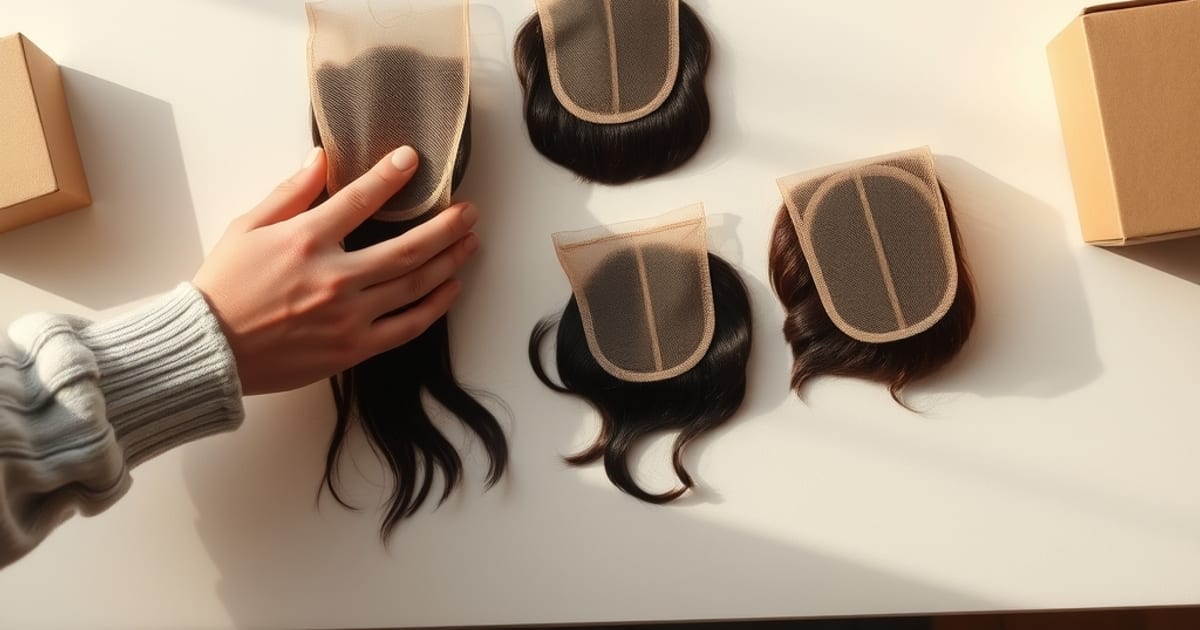
How to choose between 4x4, 5x5 and 6x6 lace closures for a natural parting
Choosing the right lace closure for a natural parting is one of the most important decisions a hair stylist or salon owner makes — because the wrong size can create a visible seam…
Read article
Payment Terms for Bulk Hair Orders: Protecting Salon Cash Flow
An honest look at advance payment in the hair trade, and the five protections a salon can set around it to keep its cash flow safe.
Read article
How to Read a Hair Extension Invoice: Key Terms B2B Buyers Must Know
Understanding the intricacies of a hair extension invoice is crucial for salon owners, boutique retailers, and wholesale distributors operating in the competitive beauty market. A…
Read article