
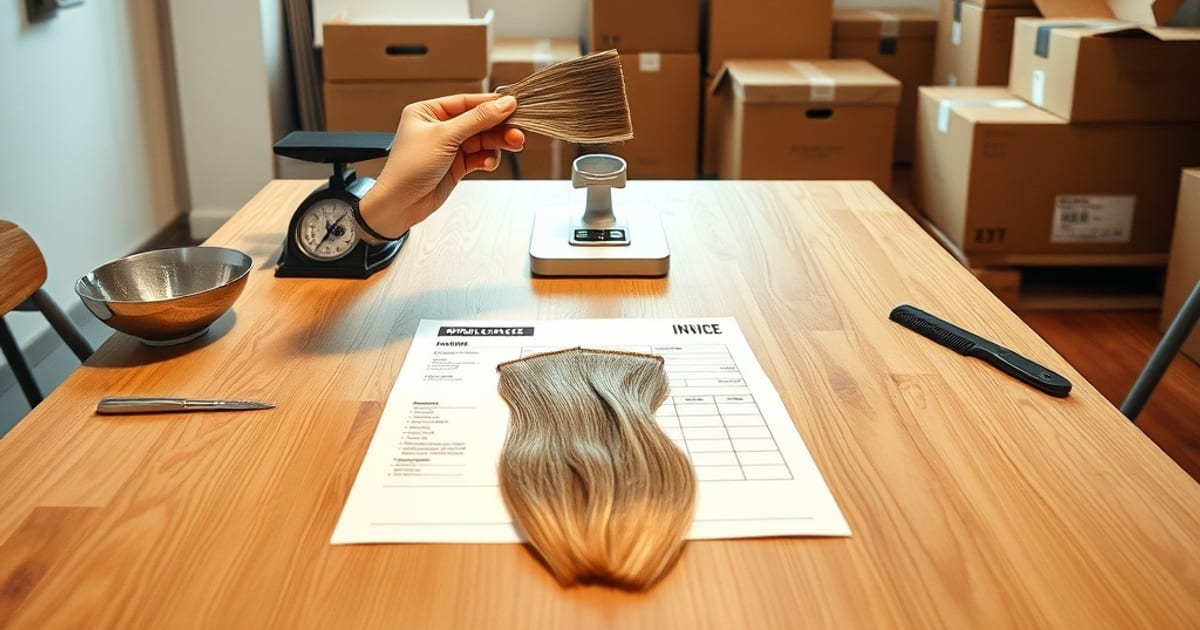
Every wholesale hair order begins with an invoice, yet many salon owners, boutique buyers and importers treat that document as a mere payment request rather than a contract in…
Every wholesale hair order begins with an invoice, yet many salon owners, boutique buyers and importers treat that document as a mere payment request rather than a contract in miniature. Misread line items, wrong HS codes or mismatched Incoterms can trigger customs delays, unexpected duties and disputes that sour a relationship before the hair even leaves Delhi. Understanding what a professional hair wholesale invoice should contain — and what to challenge — protects your margin, your timeline and your reputation. This guide walks you through the essentials, from tariff classification to shipping terms, so you can place orders with confidence.
What a Wholesale Hair Invoice Should Contain
The Header and Party Details
A legitimate hair wholesale invoice opens with clear identification of both parties: the seller's legal business name, registered address and GST or tax registration number, and the buyer's full details including shipping destination. For Suvita Hair Global, based in Delhi and operating as a manufacturer and exporter, the invoice will carry the company's export credentials alongside the buyer's import entity information. If any of these fields are missing, vague or inconsistent with the purchase order, treat the document with caution. A clean header signals that the supplier understands cross-border compliance and is prepared to issue the export paperwork your customs authority will demand.
Line Items and Descriptions
Each product line should list the hair type, weight in kilograms, length range, texture and bundle count. Descriptions must match what was agreed in the proforma invoice or purchase order — vague terms like "Indian hair" without specifying grade, donor count or processing level invite disputes at delivery. Reputable manufacturers break bundles into clear units: raw single-donor, virgin two-to-three-donor and Remy three-to-five-donor, all drawn at Suvita Hair Global, with no grade ranked above another. Quantities, unit prices and the total should align, and the currency must be stated explicitly. Watch for hidden handling or processing fees buried in the subtotal; a transparent invoice itemises every charge.
HS Codes for Hair Extensions — What You Need to Know
Common HS Codes for Human Hair Products
The Harmonised System code determines the duty rate applied in your destination country, and hair products sit under several chapters depending on processing. Unprocessed or simply styled human hair typically falls under HS 0501, while wigs, toupees and similar articles are classified under HS 6703 or 6704. Bundles and closures that have been wefted or sewn may attract a different code than loose hair, so the invoice description must match the physical product. Misclassification — whether accidental or deliberate — is a common source of customs holds, penalties and retrospective duty demands. Ask your supplier to confirm the HS code they are using and cross-check it against your country's tariff schedule before shipment.
Why Correct Classification Matters
Duty rates for human hair can range from negligible to double-digit percentages depending on the code applied and your nation's trade agreements. A small error on the commercial invoice can cascade into a large unexpected cost at the border, or worse, a shipment held in customs while the classification is resolved. Suvita Hair Global, as an established manufacturer and exporter, prepares invoices with the correct HS code for each product line and supplies supporting documentation to smooth clearance. As a buyer, you should verify that the code on the invoice matches the product you ordered and that the declared value is consistent with the agreed wholesale list pricing, which at Suvita applies from 1.5 kg with no minimum order quantity and sample orders welcome.
Incoterms Explained for Hair Importers
DDP, DDU, CIF, FOB — Which Fits Your Order
Incoterms define who bears the cost and risk at each stage of transit, and choosing the wrong term can leave you paying for freight, insurance or customs clearance you expected the supplier to handle. DDP (Delivered Duty Paid) places maximum obligation on the seller, including import duties, which suits buyers unfamiliar with foreign customs procedures. DDU (Delivered Duty Unpaid) shifts duty responsibility to you, often lowering the upfront invoice but requiring a customs broker on arrival. CIF and FOB are sea-freight terms less common for small hair shipments sent by DHL Express, which is Suvita Hair Global's standard carrier with full export documentation including commercial invoice, packing list and certificate of origin. Always confirm which Incoterm appears on the invoice and what it covers before you release payment.
Red Flags and What to Verify Before You Pay
Documentation Checklist
Before you authorise a SWIFT bank transfer — the payment method required by Suvita Hair Global in full advance — run through this checklist against the invoice and accompanying paperwork:
- Seller legal name, address and tax registration match the proforma invoice and purchase order.
- Product descriptions, weights, lengths and grades correspond exactly to what was quoted.
- HS codes are stated and align with the product type and your country's tariff schedule.
- Incoterm is clearly named, and you understand who pays freight, insurance and import duty. Total amount, currency and payment terms match the agreed wholesale list pricing.
- Export documents promised — commercial invoice, packing list, certificate of origin — are listed or attached.
- Private-labelling details, if requested, specify custom boxes, bags, branded tags, hang-cards, logo printing, inserts and care cards, with the minimum 50-piece order size confirmed.
Payment and Shipping Terms
Wholesale hair transactions between manufacturers and international buyers almost always require 100% advance payment by SWIFT bank transfer, and that is standard practice for a Delhi-based exporter managing raw material procurement and production scheduling. The invoice should state the bank details clearly and reference your order number so the payment can be traced. Shipping via DHL Express with full export documentation means you receive a commercial invoice, packing list and certificate of origin with every consignment, which simplifies customs clearance in most jurisdictions. If a supplier offers shipping terms that deviate from these norms without clear justification, question the arrangement before funds move.
Working with a Manufacturer-Exporter Like Suvita Hair Global
Choosing a supplier who controls manufacturing and export in-house removes layers of intermediaries and reduces the risk of invoice discrepancies. Suvita Hair Global operates from Delhi as both manufacturer and exporter, which means the name on the commercial invoice is the same entity that sourced the hair, processed it and arranged DHL Express shipment. That single-point accountability simplifies communication when HS codes need clarification, Incoterms require adjustment or private-labelling specifications change. Standard orders ship unbranded in plain packaging, while private labelling — custom boxes and bags, branded tags and hang-cards, logo printing, inserts and care cards — is available on request with a minimum of 50 pieces per private-label order. The hair itself, across every grade, carries a minimum lifespan of 3 to 5 years with proper care, and attachment intervals for tape and sew-in installations are separate considerations redone every 6 to 8 weeks, not a measure of hair durability.
What to do next: pull the last three wholesale invoices you have received and compare each against the checklist above, flagging any line that lacks a clear HS code, an explicit Incoterm or a matching product description, then contact your supplier with those gaps before placing your next order.
Ready to source premium human hair — factory-direct?
Suvita Hair supplies wholesale extensions, wigs and bundles to salons, distributors and beauty brands, with active buyers in 23 countries. Reply within 24 hours, DHL door-delivery, no middlemen.
- Factory-direct wholesale rates
- Sample orders accepted
- No MOQ — sample orders welcome
- IEC & GSTIN registered exporter
Suvita Hair Editorial with Deepak Kumar
Seven+ years sourcing, grading, and exporting Indian human hair to wholesale buyers on every continent. We write to help salons and distributors buy smarter — no fluff, just what we actually see in the factory.
Related Articles
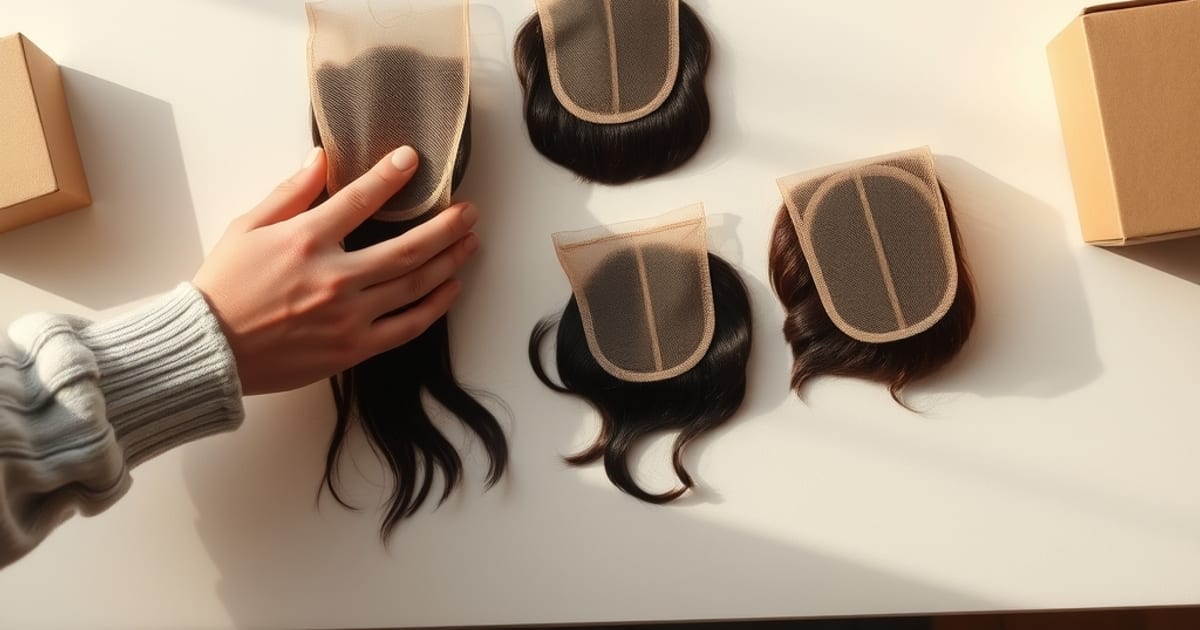
How to choose between 4x4, 5x5 and 6x6 lace closures for a natural parting
Choosing the right lace closure for a natural parting is one of the most important decisions a hair stylist or salon owner makes — because the wrong size can create a visible seam…
Read article
Payment Terms for Bulk Hair Orders: Protecting Salon Cash Flow
An honest look at advance payment in the hair trade, and the five protections a salon can set around it to keep its cash flow safe.
Read article
How to Read a Hair Extension Invoice: Key Terms B2B Buyers Must Know
Understanding the intricacies of a hair extension invoice is crucial for salon owners, boutique retailers, and wholesale distributors operating in the competitive beauty market. A…
Read article