
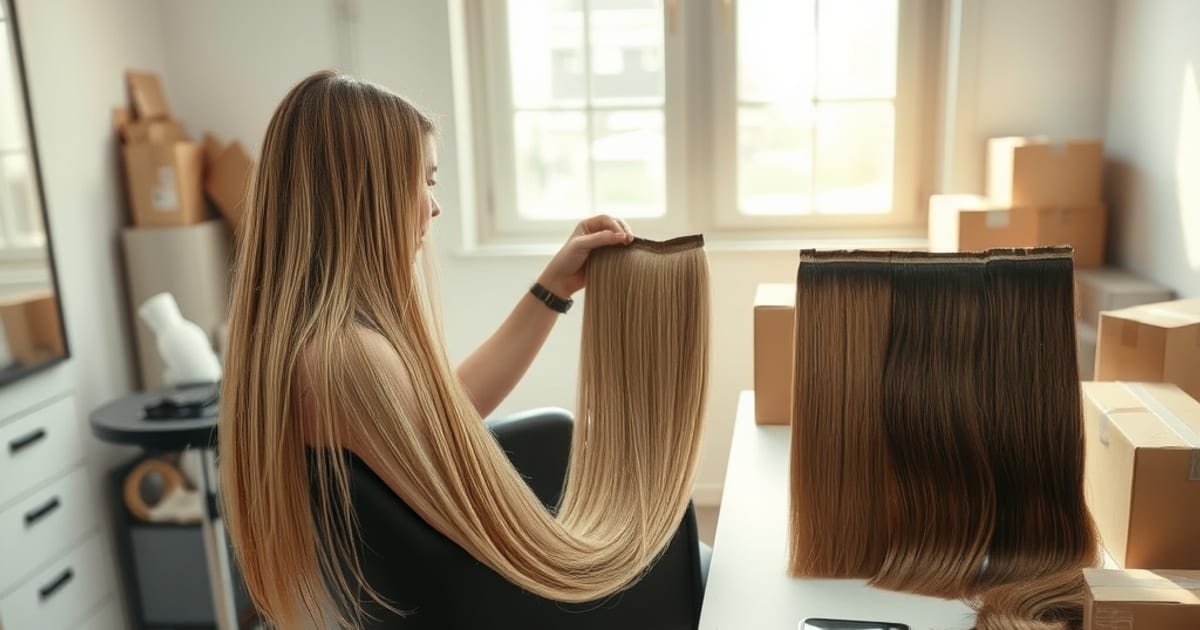
Tape-in extensions remain one of the most requested formats in salon and boutique wholesale portfolios because they install quickly, blend naturally and suit a wide range of…
Tape-in extensions remain one of the most requested formats in salon and boutique wholesale portfolios because they install quickly, blend naturally and suit a wide range of client hair types. For resellers and distributors sourcing tape-in extensions wholesale, understanding the adhesive technology, the reuse potential and the ordering mechanics helps you set realistic expectations, reduce returns and build repeat business. This guide covers adhesive types, reuse cycles and MOQ realities as they apply to Indian virgin Remy hair extensions from a Delhi-based manufacturer and exporter.
How Tape-in Extensions Are Constructed
The Tape and the Wefts
A tape-in extension consists of a thin, flexible polyester or polyamide weft sewn with double rows of hand-tied knots, bonded to two adhesive strips. The strips face each other when the extension is sandwiched between the client's natural partings. The quality of the weft, the flatness of the knots and the consistency of the adhesive strip all determine how the extension sits, how it moves and how many times it can return to the salon for repositioning.
Adhesive Types Used in Tape-in Extensions
Silicone-based vs Medical-grade Adhesives
Most wholesale tape-ins use either a silicone-coated strip or a medical-grade acrylic adhesive. Silicone strips are softer, easier to slide into place during installation and tend to cause less irritation for clients with sensitive scalps. Medical-grade acrylics offer stronger initial grip, which can be useful for fine or slippery hair, but they require more careful removal and cleaning between cycles.
Neither adhesive type is universally superior; the right choice depends on the client's hair texture, scalp sensitivity and lifestyle. A responsible wholesale buyer stocks both options so stylists can match the extension to the client rather than forcing one format onto every head.
Reuse Cycles for Tape-in Extensions
How Many Times Can Tape-ins Be Reused
With proper removal, gentle adhesive cleaning and correct storage, tape-in extensions can typically be reused between four and eight cycles, depending on hair type, aftercare and installation technique. The hair itself — when maintained with sulphate-free products, regular conditioning and low-heat styling — lasts a minimum of three to five years across every grade Suvita Hair Global supplies.
It is important to separate the attachment interval from the hair lifespan. Tape and sew-in attachments are generally redone every six to eight weeks; that schedule refers to the repositioning of the weft, not the degradation of the hair fibre. Reusing tape-ins beyond their adhesive life risks slippage, tangling or scalp irritation, so salons should inspect strips at each visit and retire extensions when the adhesive shows cracking, peeling or uneven thickness.
Wholesale Considerations: MOQ, Private Labelling and Ordering
No MOQ, Sample Orders and List Pricing
Suvita Hair Global, the Delhi-based manufacturer and exporter, does not impose a minimum order quantity. Sample orders are welcome, which lets boutique owners and distributors test weft density, strip width and adhesive behaviour before committing to larger volumes. Wholesale list pricing applies from 1.5 kg, and standard orders ship unbranded in plain packaging unless private labelling is requested.
Private Labelling Options
Private labelling is available on request and covers custom boxes and bags, branded tags and hang-cards, logo printing, inserts and care cards. The minimum for any private-label order is 50 pieces per design. Payment is settled 100 per cent in advance by SWIFT bank transfer, and shipments travel by DHL Express with full export documentation including commercial invoice, packing list and certificate of origin.
Care Practices That Extend Attachment Life
A Practical Checklist for Stylists and Clients
Following a consistent aftercare routine protects both the adhesive and the hair fibre across reuse cycles. Share this checklist with your retail partners:
- Wash with a sulphate-free, alcohol-free shampoo and a lightweight conditioner, focusing on mid-lengths and ends.
- Avoid direct heat on the adhesive strips; use a heat protectant when styling above the ears.
- Brush gently from the ends upward, starting below the tape line, with a soft-loop or tape-in brush.
- Sleep on a silk or satin pillowcase and loose braid long hair to reduce friction.
- At removal, use an adhesive-dissolving solution and peel strips slowly; never pull or slide dry adhesive.
- Clean residual adhesive from the weft with a soft cloth and isopropyl-free remover, then store flat in a dust-free pouch.
- Inspect strips before each reinstallation and retire the extension if the adhesive is brittle, sticky unevenly or visibly thinning.
What to do next: review your current tape-in inventory against the adhesive types your stylists prefer, request a sample pack from Suvita Hair Global to test weft and strip performance, and decide whether private labelling fits your brand roadmap before placing your first wholesale order.
Ready to source premium human hair — factory-direct?
Suvita Hair supplies wholesale extensions, wigs and bundles to salons, distributors and beauty brands, with active buyers in 23 countries. Reply within 24 hours, DHL door-delivery, no middlemen.
- Factory-direct wholesale rates
- Sample orders accepted
- No MOQ — sample orders welcome
- IEC & GSTIN registered exporter
Suvita Hair Editorial with Deepak Kumar
Seven+ years sourcing, grading, and exporting Indian human hair to wholesale buyers on every continent. We write to help salons and distributors buy smarter — no fluff, just what we actually see in the factory.
Related Articles
Understanding Hair Extension Weights: Why 100g vs 50g Matters for Salons
When a salon owner or reseller orders hair extensions, one of the most common sources of confusion is bundle weight. A listing that says 100g versus 50g can look like a simple…
Read article
Wig Cap Construction Types: Lace, Silk, and Mesh Compared for Salons
When a salon stocks hair extensions and wigs, the conversation rarely stays focused on the hair itself for long. Clients want to know how the piece will feel, how natural the…
Read article
How to Judge Remy Hair Quality Without Grade Numbers
Grade numbers on Remy hair are marketing labels. Here is the written spec to ask for instead and six tests to run on a delivery.
Read article