
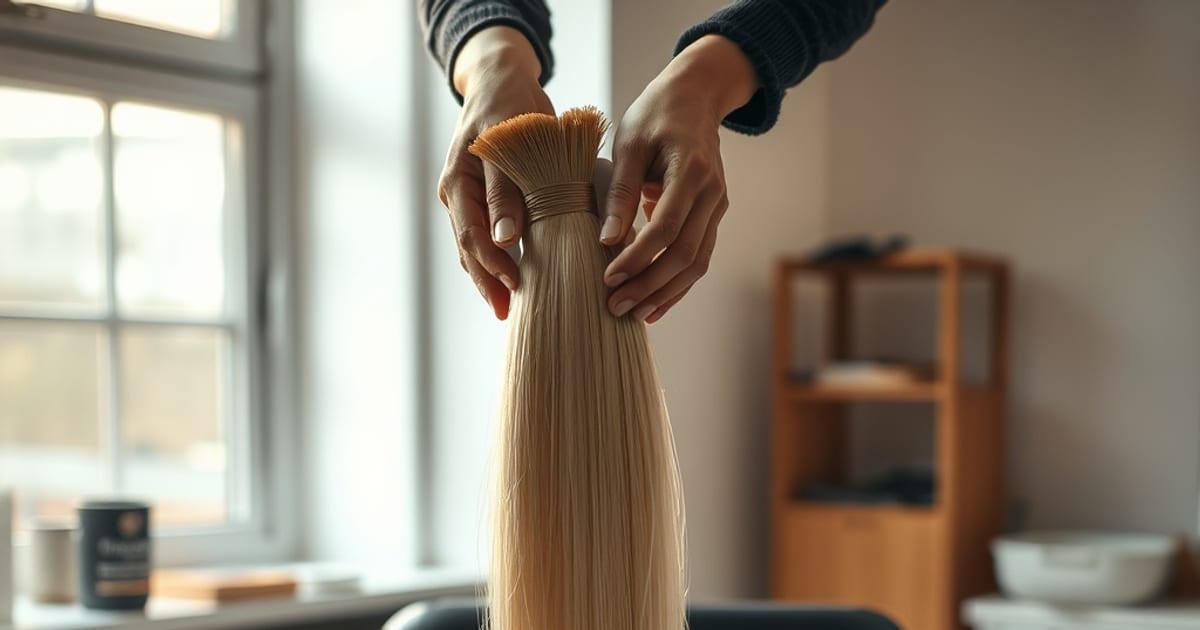
Bleaching, toning and coloring extensions are among the most requested services in salons worldwide, yet the results depend heavily on the hair's origin, cuticle condition and the…
Bleaching, toning and coloring extensions are among the most requested services in salons worldwide, yet the results depend heavily on the hair's origin, cuticle condition and the chemistry applied. For salon owners and colourists working with Virgin Remy Indian human hair, understanding what the fibre can tolerate — and where it cannot — is the difference between a flawless result and compromised bundles. This guide covers the science, the risks and the practical steps that protect both the extension and the client's trust.
Understanding Virgin Remy Hair Before Chemical Processing
Not all human hair extensions behave the same way under bleach or dye, and the starting condition of the cuticle is the single most important variable. At Suvita Hair Global, our Virgin Remy Indian hair is sourced from a single donor per bundle in the raw grade, 2 to 3 donors in the virgin grade, and multiple donors in the same age range for the Remy grade. These categories describe donor grouping only — they do not indicate a quality hierarchy. Every bundle leaves our Delhi manufacturing facility with intact, aligned cuticles that run in one direction, which is what gives Remy hair its characteristic softness and colour absorption consistency.
Why Cuticle Integrity Changes Colour Outcomes
When the cuticle lies flat and aligned, colour deposits evenly and bleach lifts in a predictable window. When the cuticle is raised, chipped or misaligned, the same formula can produce streaking, patchy lift or over-processing at the ends while the roots remain untouched. This is why we always recommend a strand test before any full-colour service, regardless of the brand. Even within the same batch, slight variations in donor hair density can shift lift time by several minutes.
Bleaching Extensions — What Works and What Damages
Bleaching extensions demands a lighter touch than bleaching natural head hair, because the fibre has already been processed through sorting, washing and packaging. Indian Virgin Remy hair responds well to gentle, low-volume developers, but aggressive double-process lifts or prolonged exposure to high-volume peroxide will strip the cuticle, increase porosity and leave the bundle brittle.
The Lift Window Indian Hair Typically Offers
Most Indian Virgin Remy hair lifts from a dark base to a medium blonde in a single session with a 20- to 30-volume developer, provided the exposure time is monitored closely. Going lighter usually requires a second session with a fresh formula, never a longer first session. Attempting to push past the fibre's natural lift limit in one go causes irreversible protein loss, and the hair may feel mushy, stretch without returning, or snap under tension.
Common Bleaching Mistakes We See in Salons
The most frequent errors are using too-high developer volume, skipping the strand test, applying bleach to dry hair without a protective barrier, and leaving the formula on while multitasking. Each of these accelerates cuticle damage. Another mistake is bleaching bundles that already have previous colour or conditioning residue — always confirm the hair is clean and unprocessed before starting.
Toning and Coloring Extensions — Best Practices
Once the desired lift is achieved, toning locks in the cool or ash shade the client expects. For color hair extensions, permanent, semi-permanent and direct-dye formulas all behave differently on Virgin Remy fibre. Permanent oxidative dyes penetrate the cortex and last through washes, while semi-permanent and direct dyes coat the cuticle and fade gradually — a useful distinction when advising clients on maintenance frequency.
Developer Strength and Timing for Tones
Toning typically requires a lower developer volume than bleaching — 10 to 20 volume is usually sufficient. Longer processing times do not deepen the tone; they increase the risk of brassiness creeping back in as the underlying pigment reasserts itself. A 20- to 30-minute processing window with periodic checking is the safest approach for Indian Remy hair.
Colouring Dark Extensions to Lighter Shades
Going from a deep natural black to a platinum or pastel shade is a two-step process at minimum. Attempting a single aggressive bleach session on dark bundles almost always causes uneven lift and protein damage. A gentler first lift to a medium brown, followed by a second session to the target blonde, preserves fibre integrity and gives a more even base for the final tone.
A Salon Checklist for Safe Colouring
Before any bleach, tone or colour service on extensions, run through this checklist to reduce risk and repeatability:
- Inspect each bundle for previous chemical treatments, residues or uneven cuticle condition.
- Perform a strand test with the exact developer volume and formula you plan to use.
- Confirm the hair is clean and free of oils, silicones or packaging residue.
- Use a lower-volume developer (10 to 30 volume) and set a timer — never leave bleach unattended.
- Check lift progress every five minutes after the minimum recommended time.
- Rinse thoroughly with cool water and apply a protein or bond-rebuilding treatment immediately after processing.
- Air-dry or use low heat, then reassess texture, elasticity and colour evenness before styling.
Caring for Coloured Extensions After the Salon
Post-colour care determines how long the shade and the fibre last. With proper care, Suvita Hair Global extensions maintain their integrity for a minimum of three to five years across every grade. Coloured bundles should be washed with sulphate-free, colour-safe shampoo, conditioned after every wear, and stored on a mannequin or hanging clip to prevent tangling. Heat styling should stay below 180°C, and UV exposure — whether from sunlight or tanning beds — will fade colour faster than any wash cycle.
Clients should also understand that attachment intervals are separate from hair lifespan. Tape-in and sew-in placements are typically redone every six to eight weeks to maintain comfort and security; that schedule refers to the attachment method, not the hair fibre itself.
What to Do Next
If you are a salon owner, boutique retailer or distributor looking for consistent, colour-friendly Virgin Remy Indian hair, reach out to Suvita Hair Global directly. We manufacture and export from Delhi, offer sample orders with no minimum, and apply wholesale list pricing from 1.5 kg. Standard shipments leave unbranded in plain packaging, while private labelling — custom boxes, bags, branded tags, hang-cards, logo printing, inserts and care cards — is available on request with a minimum of 50 pieces per order. Payment is by 100% advance SWIFT bank transfer, and every order ships via DHL Express with full export documentation including commercial invoice, packing list and certificate of origin. Share your colour-processing requirements with our team, and we will recommend the right bundle configuration and donor grouping for your service menu.
Ready to source premium human hair — factory-direct?
Suvita Hair supplies wholesale extensions, wigs and bundles to salons, distributors and beauty brands, with active buyers in 23 countries. Reply within 24 hours, DHL door-delivery, no middlemen.
- Factory-direct wholesale rates
- Sample orders accepted
- No MOQ — sample orders welcome
- IEC & GSTIN registered exporter
Suvita Hair Editorial with Deepak Kumar
Seven+ years sourcing, grading, and exporting Indian human hair to wholesale buyers on every continent. We write to help salons and distributors buy smarter — no fluff, just what we actually see in the factory.
Related Articles

Winterizing Hair Extensions: Cold, Dry Air and What to Stock
How cold, dry, heated air affects human hair extensions by install type, the winter aftercare list to hand clients, and how a cold-climate salon should adjust its autumn order.
Read article
Advanced Conditioning Rituals for Long-Lasting Hair Extensions in High-Humidity Salons
In high-humidity salons, particularly those operating in tropical climates or with clients who frequently travel between coastal and inland regions, maintaining the integrity and…
Read article
How to Match Hair Extension Lengths to Client Body Types and Face Shapes
Choosing the right hair extension length for your client is more than just a matter of preference; it is a strategic decision that can enhance their natural features and create a…
Read article