
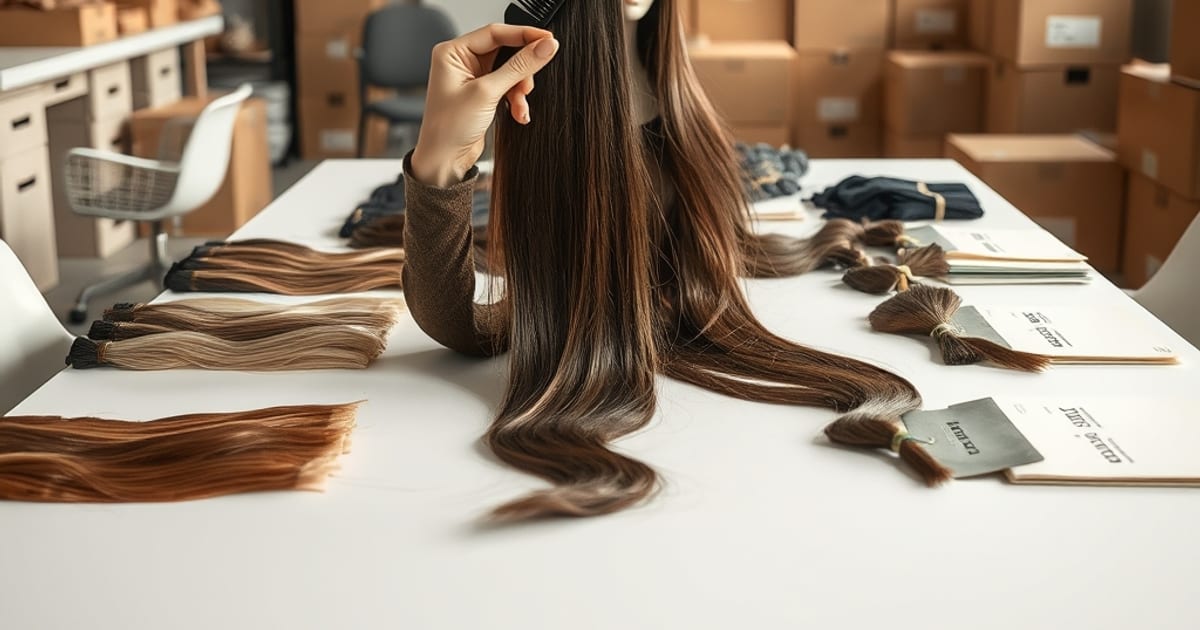
Starting a hair business from scratch can feel overwhelming, but with a clear roadmap, realistic expectations and the right supplier relationships, it is entirely achievable even…
Starting a hair business from scratch can feel overwhelming, but with a clear roadmap, realistic expectations and the right supplier relationships, it is entirely achievable even for first-time entrepreneurs. The global demand for human hair extensions remains strong, driven by salons, boutiques and online resellers across every continent. This guide walks you through the essential stages, from market research to your first shipment, so you can build a foundation that scales.
Understanding the Hair Market Landscape
Before you commit capital, take time to understand the categories of human hair available and the customers who buy them. The market splits broadly into Virgin Remy hair, processed hair and synthetic alternatives. Virgin Remy hair retains its cuticle alignment, meaning it tangles less, lasts longer and can be styled repeatedly. Processed hair has been chemically altered for texture or colour and typically has a shorter lifespan. Synthetic hair is cheaper but cannot withstand heat styling and does not blend as naturally.
Virgin Remy vs Processed Hair
Virgin Remy Indian hair is among the most traded categories worldwide because of its natural density, versatility and compatibility with Afro, curly, straight and wavy styles. Buyers expect consistent weft quality, minimal shedding and honest grading. Processed hair occupies a lower price tier and appeals to budget-conscious consumers, but margins are tighter and repeat purchase rates tend to be lower. As a new business owner, your product mix should reflect the demographic you serve and the price points your market accepts.
Building Your Hair Business Plan
A written business plan forces you to define your niche, budget, pricing strategy and growth timeline. Even a single-page plan is better than none. Start by answering these questions: Who is your ideal buyer, a salon owner stocking wefts or a boutique customer buying closures? What volume can you handle comfortably in the first six months? What is your target margin after shipping, duties and platform fees?
Defining Your Niche
Narrowing your focus early pays dividends. You might specialise in 100% Virgin Remy Indian bundles, lace closures, or ready-to-wear wigs. Each niche requires different inventory depth and marketing language. A salon-focused reseller needs bulk bundles and consistent colour lots, while a direct-to-consumer boutique may prioritise pre-bundled sets and smaller unit counts. Your niche determines whether you order in larger wholesale quantities or start with sample-sized purchases to test demand.
Sourcing Reliable Hair Suppliers
Your supplier relationship is the backbone of your business. Look for a manufacturer who controls the entire chain from collection to export, not a middleman reselling third-party stock. Ask for raw material origin details, processing methods and quality control checkpoints. Request samples before you place any order, and inspect them for colour consistency, weft durability and odour. A trustworthy supplier will answer technical questions patiently and provide clear documentation.
What to Look for in a Manufacturer
- Transparent origin labelling, such as 100% Virgin Remy Indian hair with no mixed fibres
- Consistent thickness and tension across wefts
- Willlingness to send samples before bulk orders
- Clear export documentation including commercial invoice, packing list and certificate of origin
- Responsive communication with realistic lead times
As a Delhi-based manufacturer and exporter of wholesale 100% Virgin Remy Indian human hair, Suvita Hair Global supplies bundles, wigs, closures and hair pieces to resellers and distributors worldwide. The company operates on a no-minimum-order-quantity policy, welcoming sample orders alongside wholesale purchases starting from 1.5 kg, which lowers the barrier for new entrants testing the market.
Setting Up Operations and Logistics
Once you have selected a supplier, sort out the practicalities of payment, shipping and customs. Most Indian hair exporters require 100% advance payment by SWIFT transfer before production or dispatch. Confirm the total landed cost, including DHL Express freight, commercial invoice value, packing list details and certificate of origin fees. Hair shipments typically travel in plain polybags inside outer cartons, so factor any repacking or labelling costs into your budget if you plan to rebrand for retail.
Shipping and Documentation
DHL Express is a common carrier for hair goods because of speed and tracking reliability. Ensure your supplier includes a commercial invoice stating the correct HS code, value and origin, plus a packing list matching the carton contents. The certificate of origin helps your customs clearance process, particularly in markets with import duties on hair products. Double-check that the declared value aligns with your invoice to avoid discrepancies at destination.
Growing Your Client Base
With inventory in hand, shift focus to sales channels and customer trust. Options include Instagram and TikTok storefronts, Etsy or Shopify shops, WhatsApp Business catalogues, and direct outreach to local salons. High-quality photography, honest hair care guidance and fast response times differentiate new brands in a crowded space. Offer clear return or exchange terms and communicate processing times upfront so buyers know what to expect.
As your order volume grows, revisit your supplier agreement for bulk pricing tiers, restock timelines and minimum order thresholds. A manufacturer who exports regularly to international markets will understand seasonal demand shifts and can advise on stock levels that avoid both overstock and stockouts.
What to do next
Begin by requesting samples from two or three suppliers, comparing hair quality, weft construction and shipping speed side by side. Draft a simple one-page business plan covering your target customer, first-order quantity and expected margin. Once you have chosen a partner, confirm payment terms, review the export documentation they provide and place a small test order to validate the entire process before scaling. Keep records of every shipment, cost and customer feedback so you can refine your offering as you grow.
Ready to source premium human hair — factory-direct?
Suvita Hair supplies wholesale extensions, wigs and bundles to salons, distributors and beauty brands, with active buyers in 23 countries. Reply within 24 hours, DHL door-delivery, no middlemen.
- Factory-direct wholesale rates
- Sample orders accepted
- No MOQ — sample orders welcome
- IEC & GSTIN registered exporter
Suvita Hair Editorial with Deepak Kumar
Seven+ years sourcing, grading, and exporting Indian human hair to wholesale buyers on every continent. We write to help salons and distributors buy smarter — no fluff, just what we actually see in the factory.
Related Articles
Hair Bundles Pricing Guide — What Affects Wholesale Rates?
Understanding the factors that influence hair bundles pricing is crucial for salon owners, boutique retailers, and distributors looking to build profitable partnerships with…
Read article
How to Build Your Own Hair Brand with Private Label Extensions
The brand decisions behind a private label hair line: who it is for, the name, the first products to launch and the packaging, with private label from 50 pieces.
Read article
How to Source Hair Extensions Wholesale from India
Sourcing hair extensions wholesale from India has become a strategic priority for salon owners, boutique retailers and importers worldwide. The country's deep-rooted hair…
Read article